
Discover The Latest Blogs
Stay updated with Our Informative Blog Posts
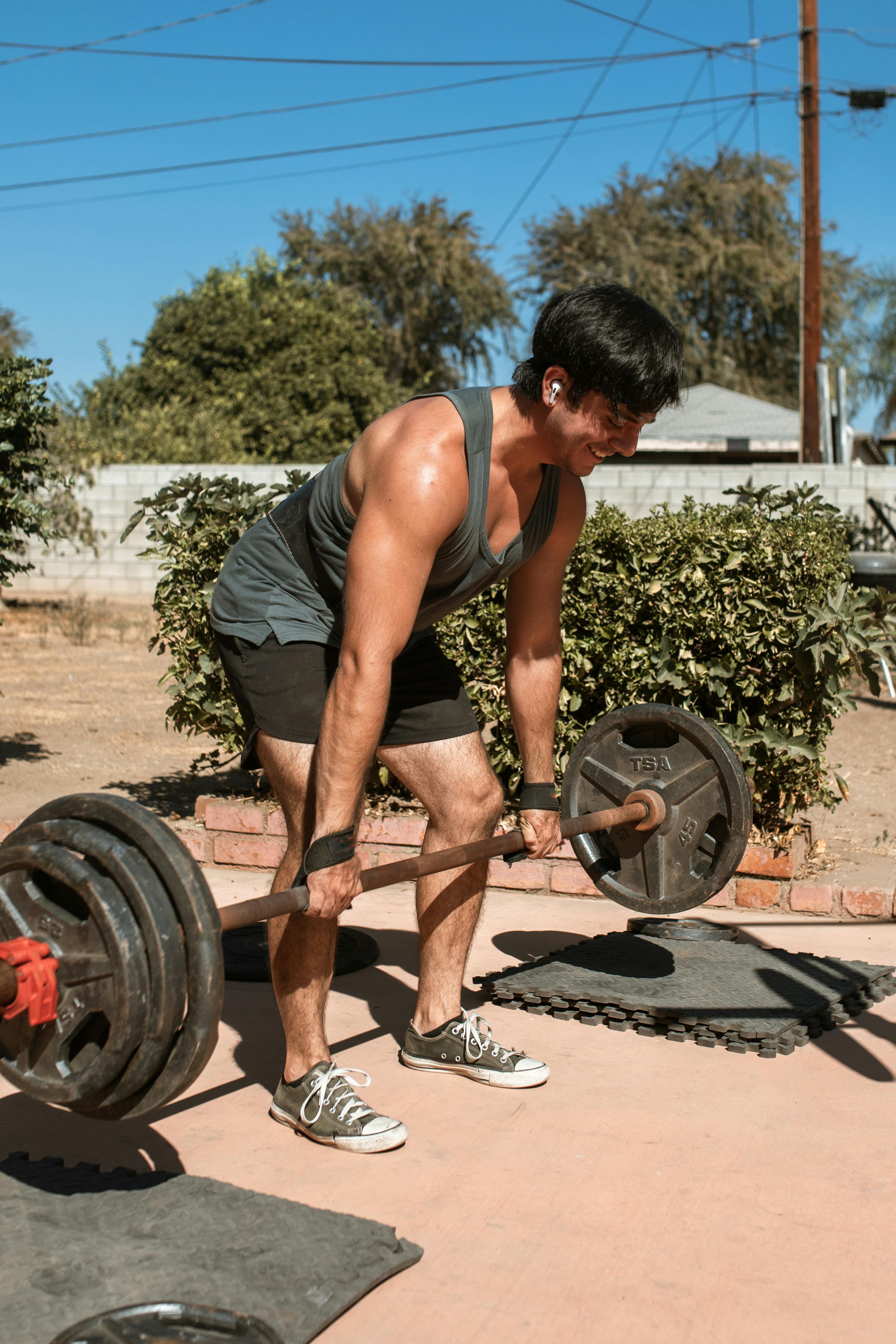
Why Training to Failure Might Be Safer Than You Think - Paul Oneid
Why Training to Failure Might Be Safer Than You Think
You've probably been told that training to failure is reckless. That's how people get hurt. That smart lifters leave a few reps in the tank to "train smarter, not harder."
Here's the problem: you're not training hard enough to create the adaptations your body needs to handle the loads you're asking it to move. And that's actually putting you at greater risk.
The Misconception That's Limiting Your Progress
Last week, a client check-in came in. On paper, everything looked dialled in. Programming was solid. Exercise selection was appropriate. But when we reviewed the training footage, the issue became obvious: he wasn't reaching failure on a single set.
Every set stopped at what felt challenging. Every rep looked smooth. And that was the entire problem.
His body had no reason to adapt. He wasn’t asking his tissues to handle progressively heavier loads so he was never creating the stimulus that forces those tissues to get stronger. He was essentially hoping his body would prepare for a test it had never seen before.
Why Submaximal Training SUCKS (most of the time)
Your body adapts to the specific demands you place on it. This isn't motivational speak. It's basic exercise physiology. The specific adaptation to imposed demands.
When you consistently leave reps in the tank, you're teaching your body that it never needs to produce maximum effort. Your nervous system doesn't learn to recruit motor units efficiently under fatigue. Your connective tissues don't experience the mechanical tension required to strengthen. Your muscles don't get pushed to the point where growth becomes necessary.
So you’re getting all the fatigue and none of the payoff. You’re essentially playing the training equivalent of “just the tip.” (Sorry, I couldn’t help myself.)
You build no new muscle, your joints don’t get more resilient, and you don’t build any new stability in end ranges. Yea, you’ll probably maintain what you have, but you won’t get any better.
The Case for Controlled Failure
Training to failure doesn't mean reckless abandon. It means taking a set to the point where you cannot complete another rep with proper form. That last word is critical: proper form.
When I tell clients to train to failure, I'm telling them to maintain tempo, maintain position, and stop when they can no longer do both. Not collapse under the bar. Not turn a squat into a good morning. Not start swinging dumbbells with momentum.
This creates a very specific adaptation: your body learns what true effort feels like. It learns to produce force under fatigue. It builds the structural capacity to handle loads at the edge of your current capability.
More importantly, it gives you objective data. You know exactly where failure occurs. You know what your actual capacity is, not what you think it might be. This gives you a benchmark for what you need to exceed next session.
This is the basis for perpetual personal progression. This process of continually raising the bar for your objective performance is a core tenet of training, serving as a vehicle for personal progression.
How to Apply This Without Breaking Yourself
Here's the framework I use with every client who needs to learn how to train to failure safely:
Start with exercises where failure is mechanically safe. Leg press with safety pins set properly. Machine work. Dumbbell exercises where you can simply drop the weight. Not barbell squats on day one.
Maintain your tempo standards. If your prescribed tempo is 3-1-1-1, that doesn't change when you approach failure. The set ends when you can no longer hit that tempo, not when the weight feels heavy.
Add load in small increments. Going from 135 to 185 because you "felt strong" is how you overshoot your actual capacity. Five to ten pounds at a time. Boring works.
Use failure as information, not validation. The goal isn't to prove you're tough. It's to find the precise point where your current capacity ends so you know where to build from.
The Permission You've Been Waiting For
If you've been training conservatively because you thought it was the smart approach, you now have permission to push harder. Not recklessly. Intelligently.
Your body is more resilient than you're giving it credit for. But resilience has to be earned through exposure to challenge, not protected by avoiding it.
Train to failure. Learn where your edges are. Build from there.
That's how you get stronger. And ironically, that's how you stay healthy.
If you're unsure whether your current training approach is creating the adaptations you need or just creating fatigue, book a call with one of our coaches. We'll review your training, identify where you're leaving progress on the table, and give you a clear framework for pushing appropriately without breaking yourself. No sales pitch. Just an honest assessment of whether your approach matches your goals.
Stay Strong,
Paul Oneid, MS. MS. CSCS
Founder and Head Coach