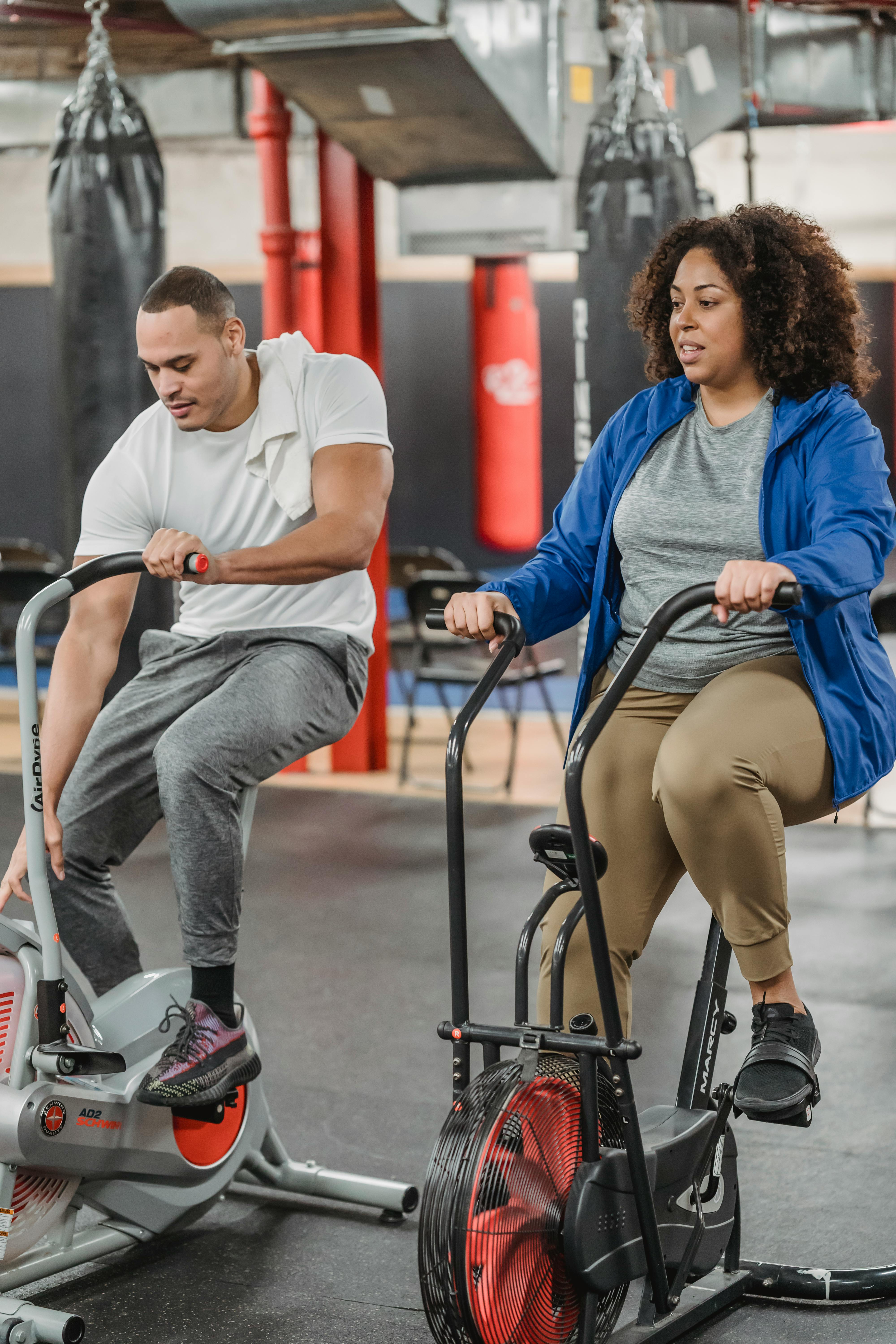
Fasted cardio: Should you do it? - Olivia Oneid
Fasted cardio: Should you do it?
Fasted cardio is one of those things that sounds more magical than it usually is.
You wake up, drink your coffee, hop on the treadmill, and tell yourself you’re finally tapping into body fat. And to be fair, there is a reason that idea caught on. When you train in a fasted state, your body does tend to rely more on fat during the session itself. Research also suggests that training before breakfast can increase fat utilization during exercise and may improve markers of insulin sensitivity.
So no, fasted cardio is not nonsense. But it also is not the fat loss cheat code people want it to be.
That’s the part that gets lost.
Burning more fat during the workout is not the same thing as losing more fat over time. When researchers have compared fasted versus fed cardio for body composition, the advantage tends to disappear once calories, training, and the rest of the day are accounted for. Acute fat oxidation goes up, but long-term fat loss usually does not meaningfully outperform fed training.
That said, there are still situations where fasted cardio can make sense.
One is metabolic flexibility. At a simple level, metabolic flexibility is your body’s ability to switch between fuel sources efficiently. The more capable you are of using fat when fuel is scarce and carbohydrate when demand is high, the better your metabolism tends to function. That flexibility is closely tied to fitness and insulin sensitivity. Some studies suggest that performing aerobic exercise before breakfast can enhance lipid utilization during exercise and may improve certain markers of insulin sensitivity, particularly in people who are overweight or have impaired metabolic health.
Another benefit is psychological, and I actually think this matters more than anything…
For some people, fasted cardio is simply the easiest way to get it done. There is less friction. No meal to plan. No waiting. No mental negotiation. You wake up, move, and it is handled before the day starts throwing punches. That does not make it physiologically superior. It makes it practically useful. And practical usually wins.
And if you are choosing to do fasted cardio, there are a couple of supplements that actually have some rationale here.
Caffeine is the obvious one. It can increase alertness, reduce perceived effort, and slightly enhance fat oxidation during exercise. It is simple, effective, and well supported.
Yohimbine often comes up in this conversation because its mechanism involves increasing fat mobilization, particularly in stubborn areas. The reason people pair it with fasted cardio is that insulin can blunt its effect, so a fasted state theoretically allows it to work better.
That said, this is not something I broadly recommend. Yohimbine can increase heart rate, anxiety, and blood pressure, and for a lot of women who are already high stress, under-recovered, and pushing hard, it tends to do more harm than good. Just because something can work does not mean it is worth it in your context.
But here is where I want to take a pause, especially for women.
Just because fasted cardio can work does not mean it is worth it for everyone.
For women who are already training hard, dieting, stressed, under-recovered, under-fueled, or walking around with subtle signs of low energy availability, fasted cardio can be one more withdrawal from an already overdrawn account. Low energy availability is associated with disrupted menstrual function, hormonal disturbances, impaired bone and immune health, and reduced performance.
And importantly, it is not only about total daily calories. Within-day energy deficiency matters too. Research in female athletes shows that spending more time in a significant energy deficit across the day is associated with higher stress and less favourable physiologic outcomes, even when total intake looks similar on paper.
That is where fasted cardio can stop being a tool and start being a stress multiplier.
If you are a woman already waking up under-recovered, under-eating throughout the day, or in a dieting phase, chasing leanness, and stacking cardio on top of hard lifting, the theoretical bump in fat use during that session is usually not worth the trade-off. Not when the bigger picture might be poorer training output, higher stress load, reduced recovery, more cravings later, lower energy availability, and a body that feels less safe, not more efficient.
This is why I would never make fasted cardio a blanket recommendation.
For the woman whose goals are health, physique, performance, and a body that feels resilient, I care much more about whether her cardio is recoverable than whether it is fasted.
So, should you do it?
Maybe.
Fasted cardio can be useful when it is low intensity, short in duration, well-tolerated, and fits your life. It can be a reasonable option for easy morning walks, zone 2 work, or a simple way to build consistency. It may also have some upside for insulin sensitivity and fuel use in the right context.
But I would be cautious, or skip it entirely, if you are in a dieting phase and already feeling depleted, if your training performance matters that day, if you are prone to dizziness or blood sugar crashes, if your cycle is irregular or missing, if recovery is poor, or if cardio has quietly become a way to earn food or punish yourself.
That last one matters. Because a lot of women are not doing fasted cardio, it is truly the best tool. They are doing it because it feels harder. And in fitness culture, harder gets mistaken for better all the time.
My take?
Fasted cardio is a tool. Not a badge of honour.
If it helps you be consistent, feel good, and recover well, it can absolutely have a place. Lower intensity, zone 1→ low zone 2 would be my go-to if you do choose to do fasted cardio.
If it pushes you deeper into depletion, makes your training worse, or feeds the part of you that thinks suffering is the price of progress, it is probably not the move.
The goal is not to make your cardio harder. The goal is to make your plan work.
If you’re trying to figure out what actually makes sense for your body, your training, and your season of life, this is exactly what we work through inside MAP.
You don’t need more tools. You need the right ones, applied at the right time.
If you want help building a plan that supports both performance and long-term health, you can apply for coaching at www.masterathletic.com
Oliva Oneid
Coach, Master Athletic Performance