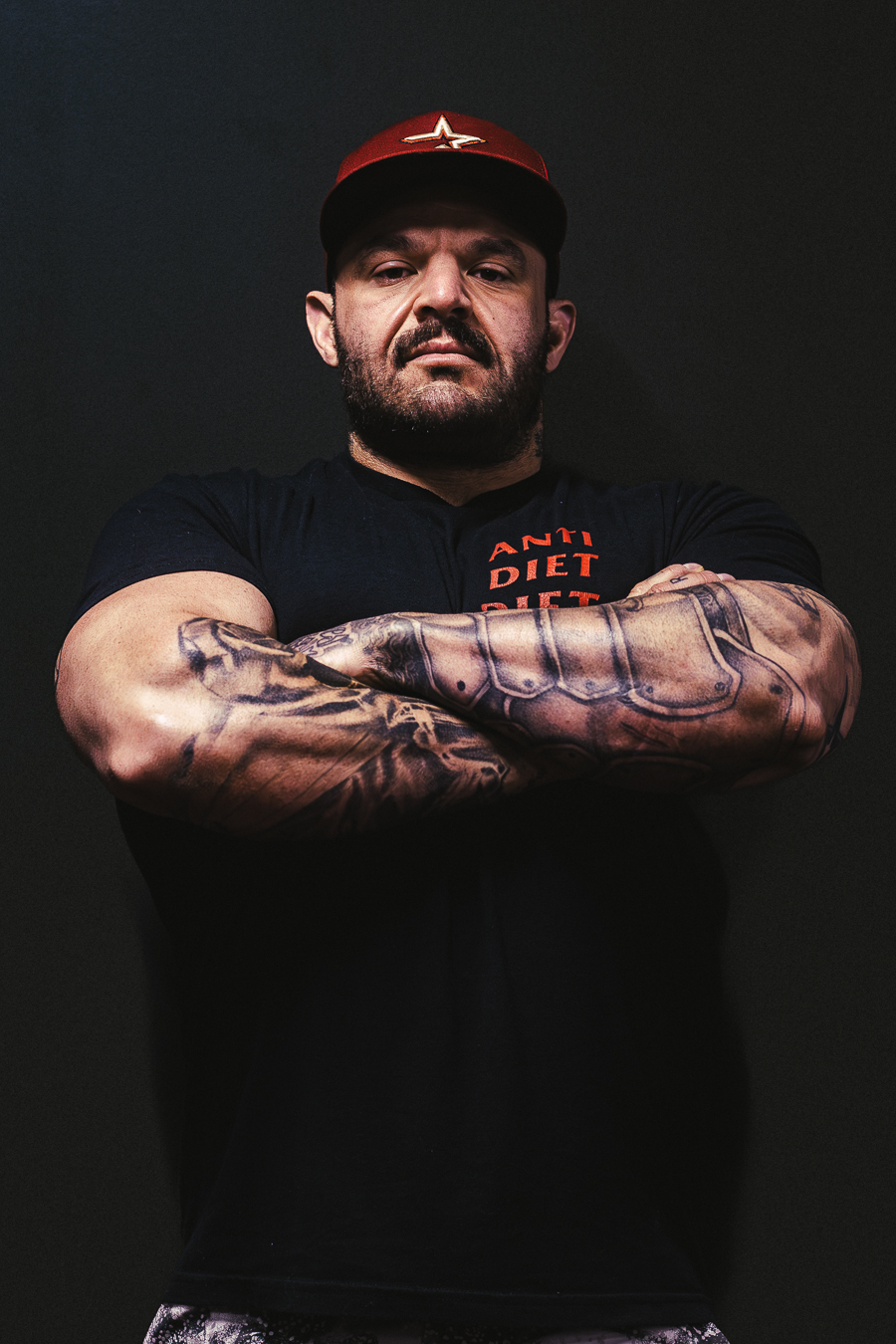
Actor or Restor: The Stress Pattern Running Your Consistency - Pau Oneid
Actor or Restor: The Stress Pattern Running Your ConsistencyI had a coaching conversation recently that stuck with me. A client who is sharp, driven, the kind of person who runs a business and a household and still shows up wanting to get better, was frustrated with herself. Every time life got heavy, her training and nutrition fell apart. Not because she didn't care. Because something in her just shut down. We talked through it, and it clicked for both of us. People respond to stress in two ways. Actors respond to stress by doing more. More training, more work, more control. I'm an Actor. When things get hard, my instinct is to push harder. It's worked for me in many ways. It's also landed me in physical therapy more than once, because pushing harder isn't always the right response. Restors respond to stress by pulling back. Less activity, more food, more withdrawal. That's not weakness. It's a nervous system doing what it thinks it needs to do. Neither one is the healthy version, and neither one is the broken version. They're just different defaults. Here's what I actually care about: most people never figure out which one they are. They just know they "fall off" when things get hard, and they assume that's a discipline problem. It's not. It's a pattern, and you can work with patterns once you can see them. If you're a Restor, what drives the food, the couch, and the skipped workouts usually isn't laziness. It's a feeling underneath it, a sense that things feel unsafe or overwhelming, and food or rest is the fastest way to feel okay again. I want to be careful here. I'm not a psychologist, and if that feeling runs deep, that's a conversation for someone qualified to have it. But at the surface level, where most of us live day to day, naming the pattern changes what you do with it. Once you can see "I'm reaching for this because I feel unsafe" instead of "I'm reaching for this because I have no discipline," you get a different set of options. You can ask what's actually generating the feeling. You can build a plan that doesn't require you to override the pattern through sheer will every single time, because that approach burns out fast for anyone. There's a second piece to this that matters just as much: learning to tell the difference between discomfort and pain. Discomfort is the workout you don't feel like doing but could. Pain is your body telling you something is actually wrong. Actors tend to blow through both. Restors tend to avoid both. Neither extreme serves you. The skill is learning to sit with discomfort long enough to grow from it, while still respecting real signals that you need to rest. I'll be honest, this isn't a framework I use to make people feel better about falling off track. I use it because it's more useful than "try harder" or "just relax," and both of those pieces of advice are usually wrong for the person hearing them. You don't need to be told to push through more. You also don't need permission to rest more. You need to know which one you actually are, so the plan fits you instead of fighting you. If you've read this and immediately knew which one you are, that's a good sign. That kind of self-recognition is the actual starting point for changing the pattern, not a New Year's resolution or a stricter tracking app. If you want help figuring out what to actually do with that information, that's the kind of thing we work through with clients at Master Athletic. Not a script. A plan built around how you're actually wired. |
Stay Strong, Paul Oneid, MS. MS. CSCS Founder and Head Coach |